
I had the great pleasure of experiencing the beautiful and meditative exploration of Monument Valley. It’s going to be difficult to find any game comparable to the feel and mood of its dreamlike world. I already miss being there in that quiet, peaceful, warm hued garden of architecture.
It probably would be good to explain what this game is about. Monument Valley features a tiny, inquisitive, faceless princess named Ida who is on a mission to return beautiful and sacred pieces of geometry to their rightful places atop magnificent architectural structures. The catch is that the structures move and shift. Not everything is what it seems.
The interaction Ida has with the structures seems to bring them to life, as if they are interactive characters in the scene. This is emphasized when Ida develops a companionship with a character called Totem who displays subtle actions of loyalty and inspires feelings of endearment while being a simple totem pole.

What makes the game so interesting is that it teaches the magic of opening one’s mind to different possibilities and perspectives, literally and metaphorically. If at any point of the game I feel stuck, I can relax and trust the process of exploration and I’ll soon find the solution.
The structures are interactive optical illusion puzzles that constantly surprise you. The developers of this game really balanced not only the difficulty to promote a flow experience but also the balance of familiarity and novelty. I know my resources like the buttons, cranks and doors which give me goals and tools. I also know the rule is to break the rules of reality somehow to get to the solution of the puzzle.
And that’s where the surprise comes in!
Every solution is a result of a directed exploratory process and is an exciting, beautiful, mysterious and unexpected climax in the sequence of the story. It shows how far the developers pushed the envelope of what their innovation can do. The incredible creativity paired with the consistency of the tone, atmosphere and challenge level made it incredibly addictive since I could never get enough of the colors, music and the variations on a gratifying theme.
I was enchanted by the way the story was told only through the silent actions of the characters and rewarding mini cutscenes without any dialogue. That is Monument Valley’s modus operandi.
What was very enjoyable about Monument Valley was that the feeling of choice was embedded in a story that I discovered to be linear. It was exciting to see how my actions would lead to the next part of the story because it gave meaning to my actions. The seamless cutscenes in the gameplay acted as narration that had room for discovery. The story didn’t feel spelled out because you found pieces of it along the way that you naturally were eager to pay close attention to.
The themes of friendship, forgiveness and the relationship between humans and their environment were expressed so delicately. Nothing was overt or too obvious or trite. The themes were developed in Monument Valley’s own unique way. The music made them that much more touching as well.
I love this game so much. I even wrote a poem about it here.
Along with that I bought the soundtrack. I love how it makes me feel and dream. It’s also a great muse for my creativity. I find this ironic because it’s as if the music from Monument Valley was embedded with the magic from the sub-meta-theme of expanding one’s mind to see possibilities and the many more perspectives one can take.
In short, Monument Valley was a very inspiring game and has become one of my great role models of game design. The joy of exploring each of those rich 18 levels has gotten my creative gears turning just like the gears in those buildings.
Creativity begets creativity.

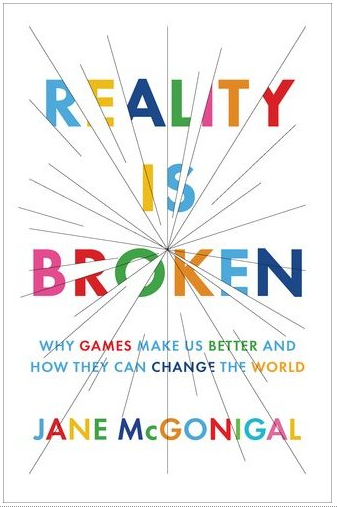 I just finished reading Jane McGonigal’s book Reality Is Broken and I feel I have had a peak experience and am that much closer to self-actualization. At the end of the book there is an appendix that lists all the amazing games that have been creatively developed to inspire personal and social change. From that I decided to make an easy accessible resource to click on and tap into that magic. Enjoy. 🙂


